The Bedside Reality: Why Legacy Mobile Radiography Fails Fragile Infants
Neonatal Intensive Care Units (NICU) and Pediatric Intensive Care Units (PICU) across modern children's hospitals present some of the most demanding clinical environments in healthcare. Bedside imaging in these high-acuity wards requires balancing extreme physical precision with patient gentleness. Legacy mobile X-ray systems—weighing between 375 kg and 700+ kg—were built around century-old thermionic rotating anode technology that imposes severe operational constraints:
- Physical Congestion & Hazards: NICU bays in a busy children's hospital are densely packed with life-support ventilators, infusion pumps, lines, and delicate canopy incubators. Heavy motorized X-ray carts are difficult to steer, increasing the risk of snagging vital patient lines or disturbing adjacent equipment.
- Acoustic Stress & Neonatal Vitals: Premature infants possess heightened sensory sensitivities. Motorized drive hum and high-RPM anode spin-up noise cause auditory stress, frequently triggering spikes in infant heart rate, respiratory distress, and intracranial pressure variations.
- Respiratory Motion Artifacts: Neonates breathe at rapid, unpredictable rates. Traditional X-ray tubes require hundreds of milliseconds to spin up their mechanical anodes. This exposure delay often misses the end-expiration phase, causing motion blur that mandates repeat radiation exposures.
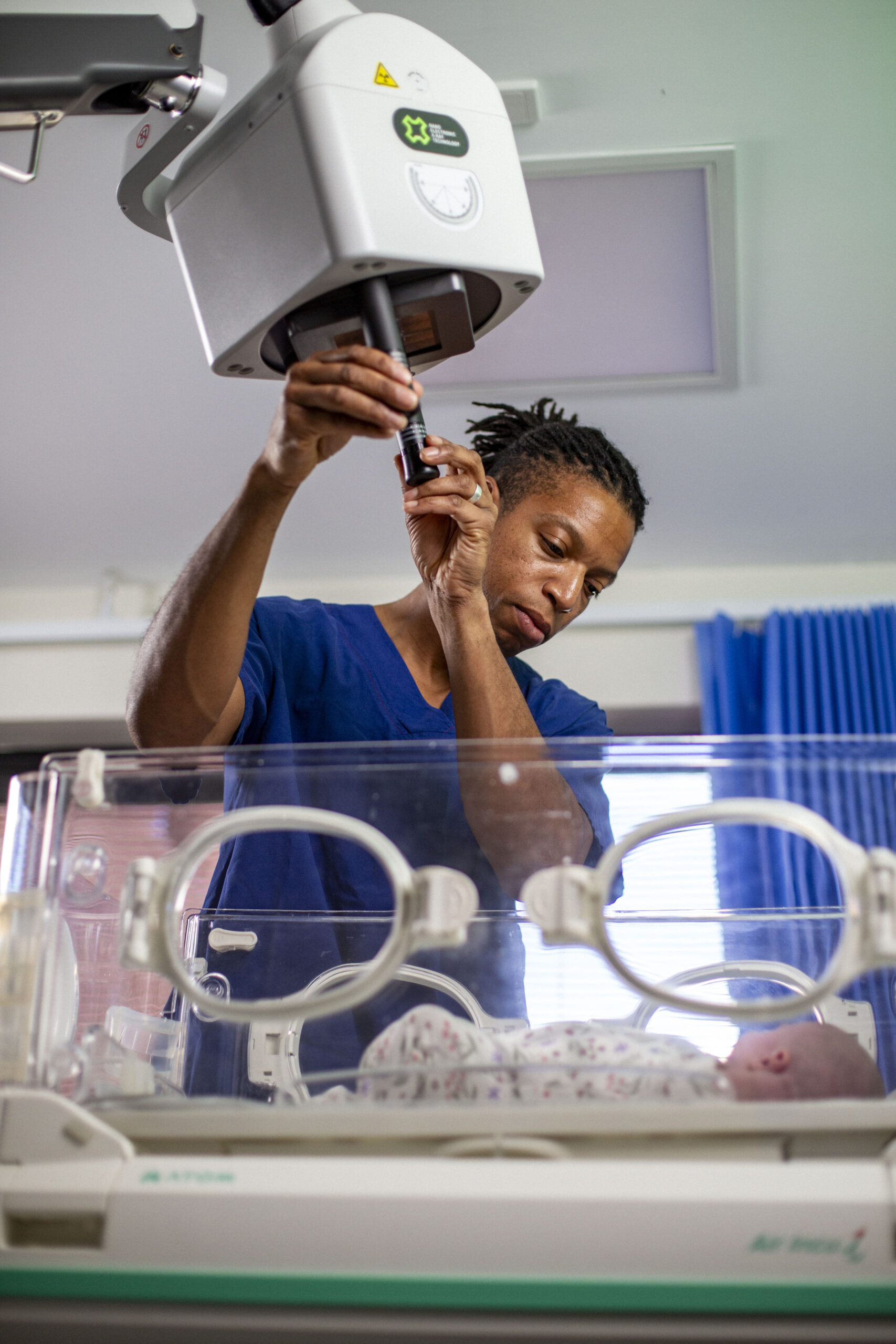
See how platform weight directly influences technologist fatigue, bedside maneuvering speed, and patient safety across pediatric wards in children's hospitals:
Solid-State Physics: Cold Cathode CNT vs. Legacy Rotating Anode
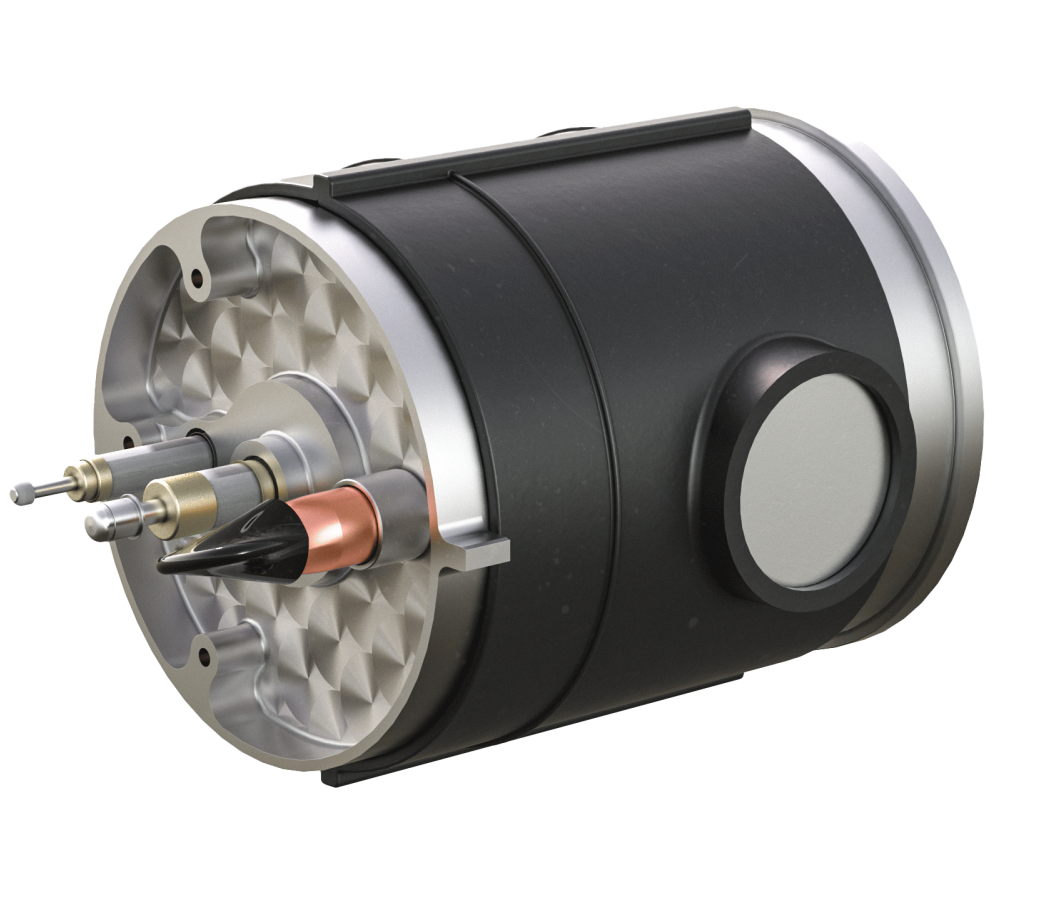
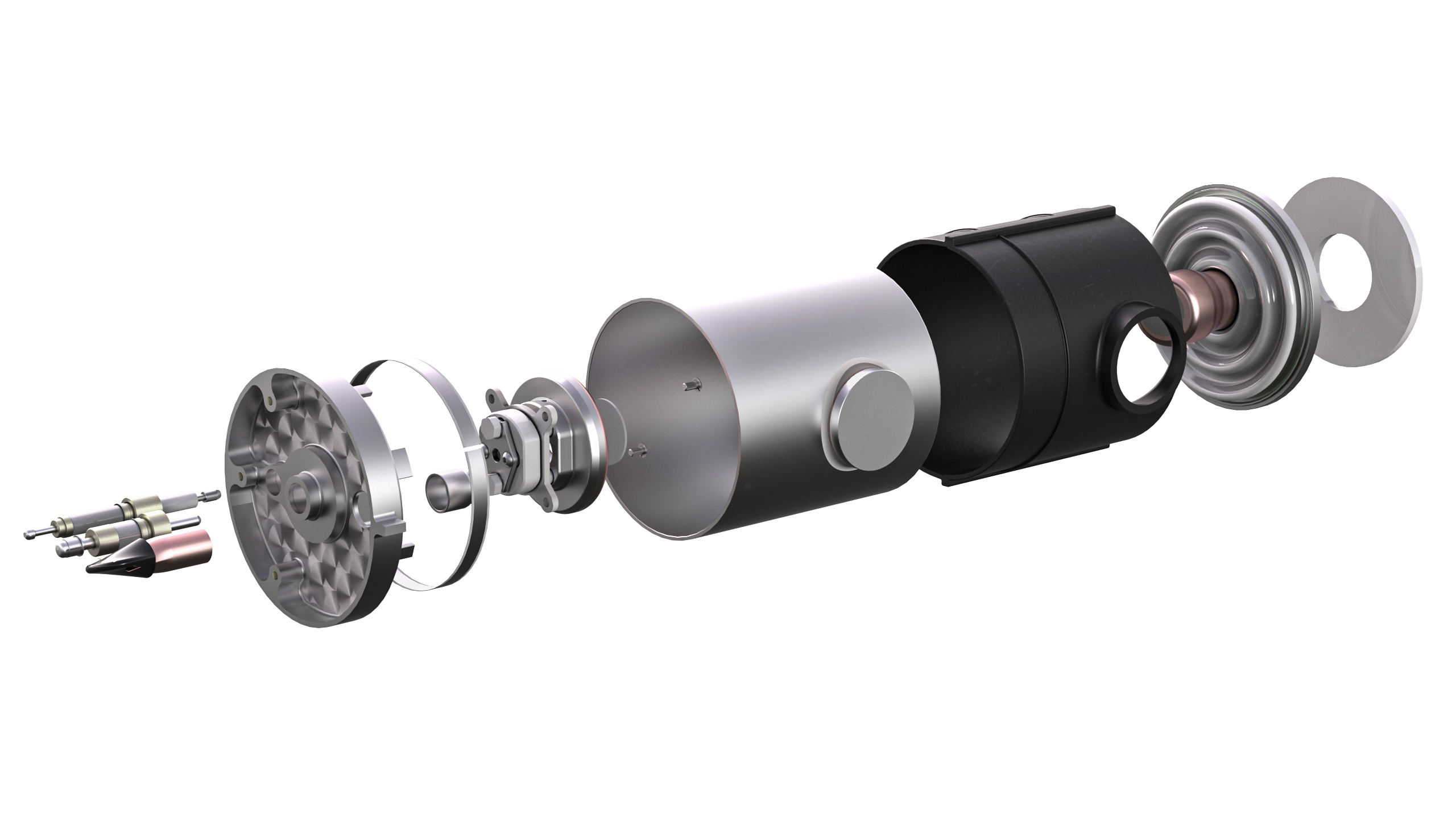
At the heart of the Micro-X Rover Plus lies Nano Electronic X-ray (NEX) technology. Rather than heating a tungsten filament to over 2,000°C to boil off electrons, cold cathode field emission utilizes carbon nanotubes to emit electron streams electronically at room temperature. Removing the high-speed rotating mechanical anode eliminates the weight, thermal lag, and acoustic noise that plague traditional mobile X-ray platforms.
Key Physical & Clinical Advantages
- Instant Exposure (0 ms Spin-Up Delay): CNT cold cathodes switch on and off electronically in microseconds. Radiologic technologists can synchronize exposures with the briefest pause in an infant's breathing cycle, virtually eliminating motion blur.
- Fine-Tuned Low-Dose Control: Operating at a 9 kW output with a precise technique range of 40 kVp to 120 kVp, the solid-state array provides exact mAs calibration tailored specifically to ultra-low-dose pediatric protocols.
- Peer-Reviewed Research Validation:
- MDPI Nanomaterials Academic Study: Peer-reviewed research confirms that carbon nanotube cold cathode arrays display linear, highly predictable X-ray emission without the focal spot migration caused by thermal expansion in rotating anodes.
- UNC School of Medicine IRB Human Imaging Trials: Clinical trials demonstrate that CNT field emission achieves diagnostic image quality equal or superior to traditional thermionic units while maintaining lower variance in patient exposure dose.
Access peer-reviewed research syntheses and clinical trial data for your physics or radiology equipment evaluation committee:
Bedside Ergonomics & Workflow Superiority
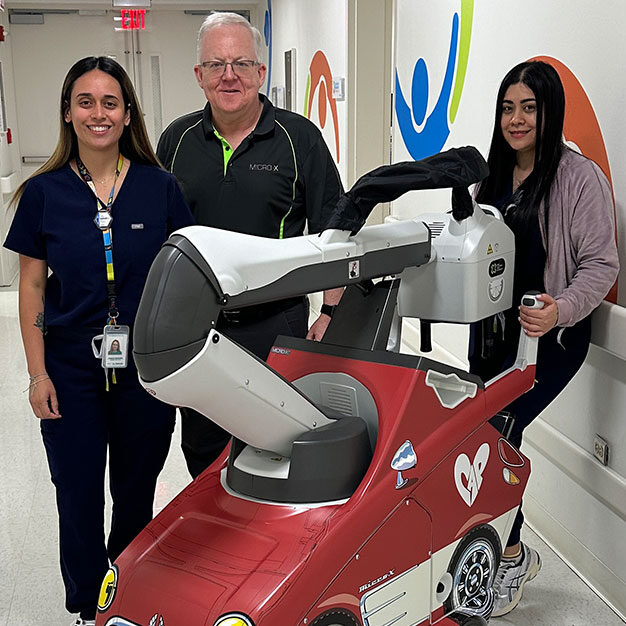
Because CNT solid-state technology removes the heavy cooling oil, motor drives, and massive battery banks required by rotating anodes, the Micro-X Rover Plus weighs only 112 kg (247 lbs). This dramatic weight reduction transforms bedside workflows across high-acuity pediatric wards:
- Motor-Free Manual Steering: Technologists can effortlessly push, guide, and position the system with one hand, removing motor drive failure points and mechanical maintenance entirely.
- Isolette & Warmer Reach: Featuring an extended vertical focal spot range from 712 mm to 2148 mm, the articulated arm glides smoothly over canopy incubators and radiant warmers without requiring repositioning of the infant or adjacent IV poles.
- Whisper-Quiet Bedside Presence: Solid-state electronic triggering ensures zero mechanical motor or spin-up noise, preserving a calm environment in neonatal wards.
- Pediatric Anxiety Reduction: Customizable, child-friendly decorative shrouds soften the clinical look of bedside equipment, easing exam anxiety for young patients, parents, and care staff.
- Instant DICOM 3.0 Verification: The integrated 15.6″ Full-HD touchscreen allows immediate bedside image verification for critical endotracheal (ET) tube, umbilical catheter (UVC/UAC), and PICC line placements.
Compare feature sets, physical dimensions, and workflow velocity across leading market systems:
Enterprise Utility: Extending Beyond Pediatric Wards
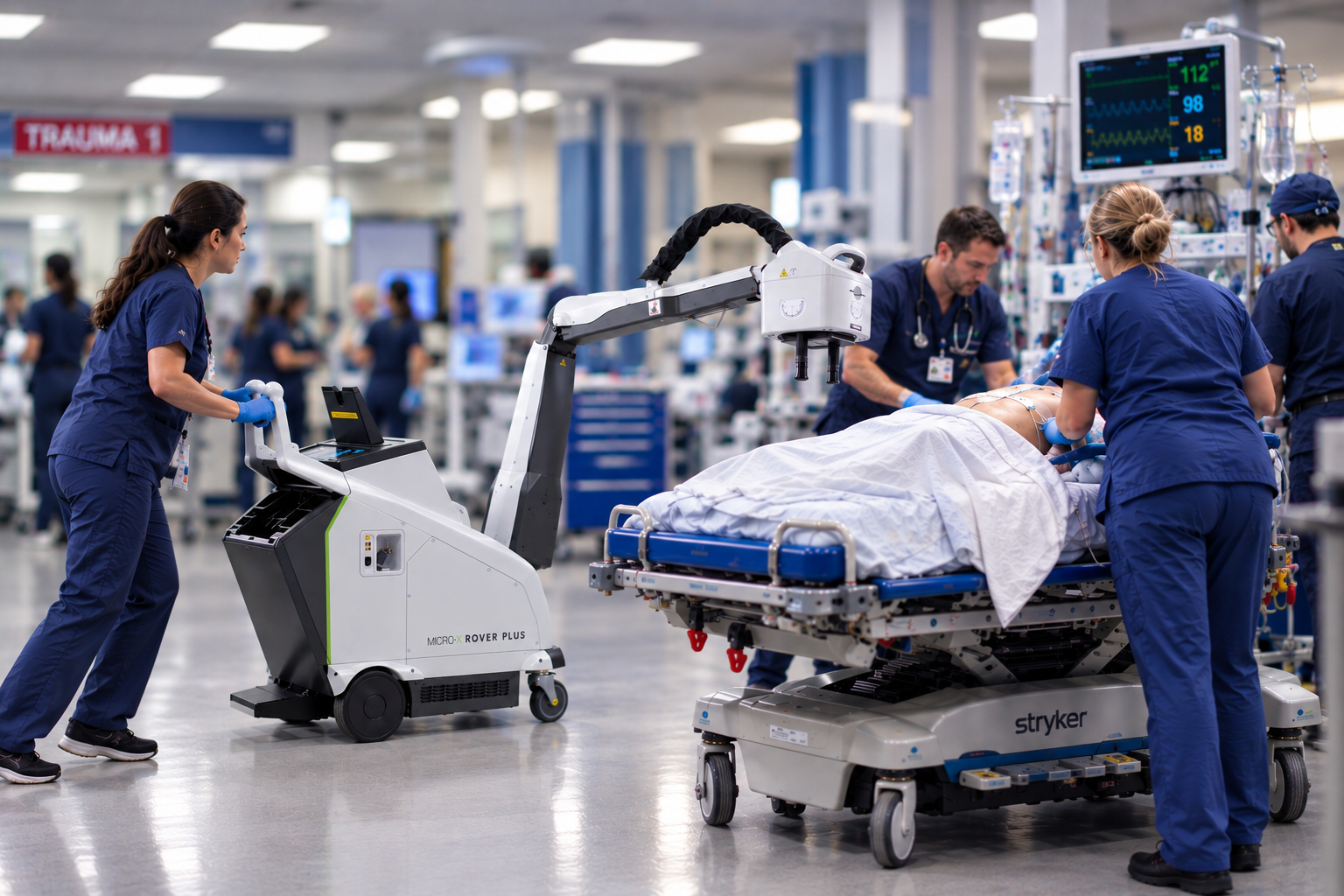
While engineered to meet the delicate demands of neonatal and pediatric care, the Micro-X Rover Plus delivers full 9 kW diagnostic power suitable for adult bedside chest, abdominal, and orthopedic exams. This enterprise versatility maximizes capital utilization across high-acuity hospital departments:
- Rapid Emergency Department Deployment: Navigates high-traffic trauma bays and crowded ED overflow corridors without requiring motorized propulsion or wide turning radii.
- General ICU & Surgical Overflow: Handles adult chest exams up to 120 kVp, providing hospital systems with a single ultra-lightweight mobile platform for both pediatric and adult critical care.
- Future-Proofed Modality Expansion: Built on Micro-X's proprietary Carbon Nanotube platform, serving as the foundational technology for next-generation point-of-care stroke and head CT modalities.
Discover how solid-state radiography enhances high-acuity care across emergency medicine and specialized neurology departments:

Side-by-Side System Comparison
The following matrix summarizes the technical, clinical, and operational differences between the Micro-X Rover Plus and traditional mobile DR platforms across high-acuity pediatric wards:
| Feature / Metric | Micro-X Rover Plus | Legacy Mobile DR Systems | NICU / PICU Clinical Impact |
|---|---|---|---|
| System Weight | 112 kg (247 lbs) | 375 kg – 700+ kg | Easy single-person manual steering; prevents line snags. |
| Tube Technology | Carbon Nanotube (CNT) Cold Cathode | Rotating Thermionic Anode | Solid-state emitter; zero mechanical friction or target pitting. |
| Exposure Delay | Instant (0 ms spin-up) | Variable (100s of ms) | Eliminates respiratory motion blur; cuts repeat pediatric exposures. |
| Acoustic Profile | Near-Silent Operation | Loud motor drive & anode whirr | Minimizes sensory stress and physiological vitals spikes in infants. |
| Tube Warranty | 10 Years | 1 Year (standard) | Dramatically reduces 10-year total cost of ownership (TCO). |
| Electrical Infra | Standard 100–240V Wall Outlet | Dedicated high-amp dock | Requires no facility electrical remodeling or dedicated docks. |
| Regulatory Status | FDA 510(k) Cleared (K211423) | Varies by platform | Fully cleared and legally marketed medical device in the U.S. |
Review comprehensive feature specifications and capital planning evaluations across leading mobile radiography systems:
Financial ROI & Total Cost of Ownership (TCO)
Hospital CFOs, procurement committees, and biomedical engineering leads must balance clinical excellence with long-term financial stewardship. The Micro-X Rover Plus optimizes Total Cost of Ownership across three core financial operational areas:
- Structural 10-Year Tube Warranty: Traditional rotating anodes wear out under intense mechanical friction and thermal fatigue, resulting in unbudgeted multi-thousand-dollar tube replacements every 12 to 36 months. Because solid-state Carbon Nanotube architecture carries no mechanical wear components, Micro-X backs the NEX tube with an industry-defining 10-year warranty.
- Zero Dedicated Charging Infrastructure: The Rover Plus charges using standard 100–240V AC wall outlets via an onboard 72 Vdc Lithium Ferro-Phosphate (LFP) battery bank. This eliminates expensive electrical remodeling, dedicated high-amperage charging docks, and specialized room buildouts.
- Minimal Preventative Maintenance Footprint: Motor-free construction completely removes drive transaxles, belts, motor control boards, and drive wheels—drastically dropping annual preventative maintenance complexity and reducing unplanned system downtime.
Access technical specifications or request formal pro forma invoice documentation to support your departmental purchasing review:
Frequently Asked Questions (FAQ)
Q: Is 9 kW power output sufficient for all pediatric ICU and NICU exams?
A: Yes. Bedside chest, abdominal, and skeletal radiography in pediatric populations require precision low-dose exposure rather than high-kilowatt scatter. The 9 kW generator (40 kVp to 120 kVp) delivers fine-tuned exposures tailored specifically to low-dose pediatric protocols.
Q: Why does the Rover Plus carry a 10-year tube warranty compared to 1 year on traditional systems?
A: Traditional tubes use high-speed spinning anodes that degrade from mechanical bearing wear and thermal stress. Carbon Nanotube field emission uses solid-state electronic switching with zero moving mechanical parts, resulting in fundamentally longer hardware operational lifespans.
Q: How does the system navigate tight spaces around canopy incubators?
A: Weighing just 112 kg (247 lbs), the Rover Plus can be manually positioned by a single operator. Its vertical focal spot range (712 mm to 2148 mm) clears overhead warmers without disturbing delicate patient lines or monitors.
Conclusion & Next Steps for Health Systems
The Micro-X Rover Plus bridges the gap between high-fidelity digital radiography, gentle bedside patient care, and sound financial investment. By removing the weight, noise, and mechanical failure points of legacy rotating anode systems, it provides clinical teams with the ideal mobile DR platform for vulnerable neonatal and pediatric patients.
Clinical & Technical Teams
Review technical data, compare platform physics, and build your departmental business case:
CFO & Executive Administration
Request formal pricing, confirm unit availability, or schedule a pro forma invoice request: