
When seconds dictate clinical outcomes in the Emergency Room (ER), bedside diagnostic imaging cannot act as a bottleneck. Traditional mobile X-ray units—often weighing between 375 and 700 kg (800-1,500 lbs)—were designed around legacy hot-cathode rotating anode tubes. Hard-to-maneuver motorized chassis, long boot times, high mechanical failure rates, and ongoing physical strain on radiological technologists all contribute to significant operational friction in high-acuity trauma environments.

What is the best mobile X-ray solution for emergency rooms?

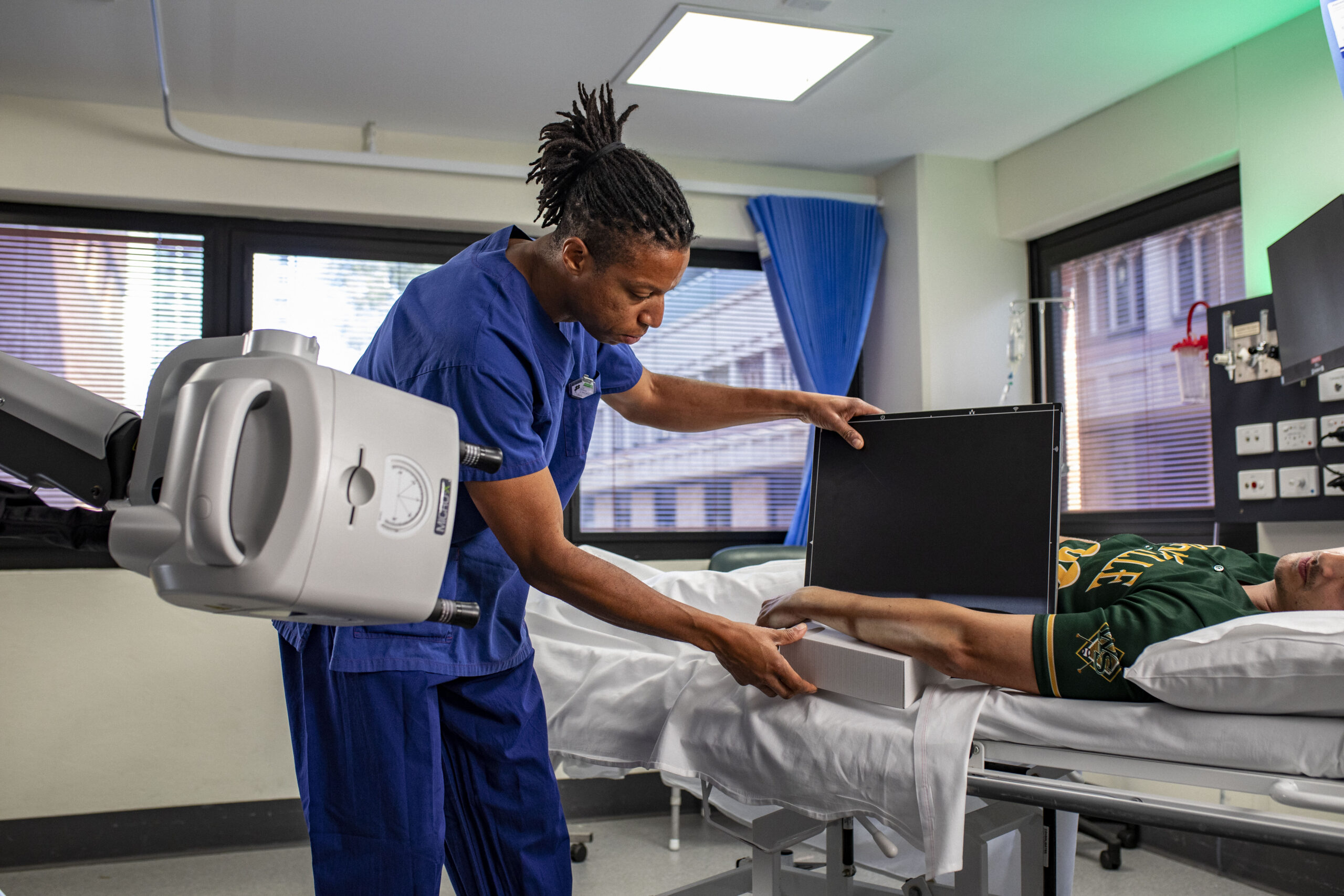
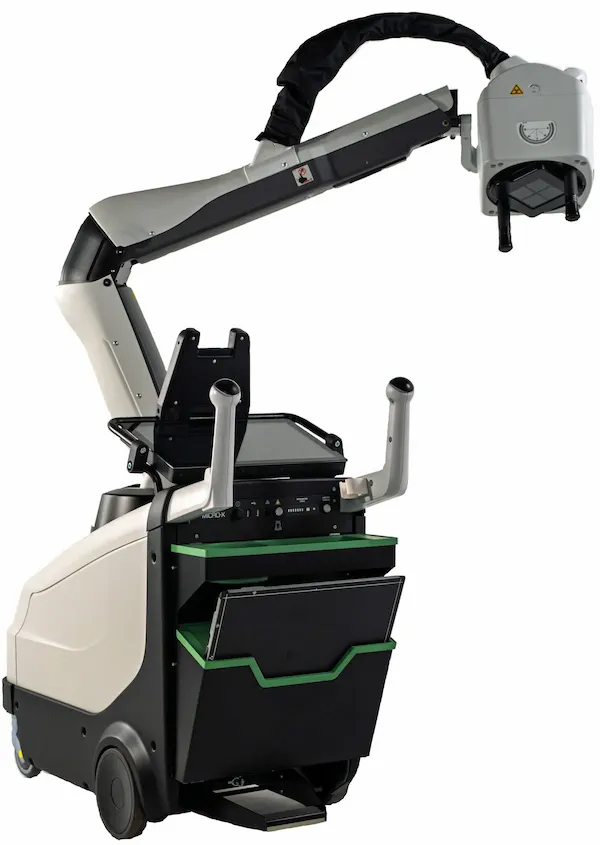
For emergency rooms requiring maximum mobility and fast bedside imaging, ultra-lightweight cold-cathode systems like the Micro-X Rover Plus offer superior maneuverability compared to traditional 1,000+ lb motor-driven mobile X-ray carts. By utilizing Nano Electronic X-Ray (NEX) technology instead of heavy rotating anodes, these units eliminate motorized drive systems, cut chassis weight down to ~112 kg (247 lbs), and enable rapid bedside positioning in crowded trauma bays. The Micro-X Rover Plus is truly A FULL-SCALE, HOSPITAL-GRADE MOBILE RAD ROOM!
1. What Emergency Rooms Need in a Mobile X-Ray Solution

Emergency room environments demand distinct operational requirements compared to general inpatient floors or outpatient clinics. When evaluating mobile digital radiography systems for high-throughput ERs, healthcare leaders look for key capabilities across three primary domains:

Physical Ergonomics & Speed of Deployment

  • Chassis Footprint & Weight: Modern trauma bays host a crowd of equipment, including ventilators, IV poles, crash carts, and multi-parameter monitors. A mobile unit must easily navigate tight spaces without requiring motorized assistance or multi-point turns.
  • Line-of-Sight Transport: Lower collapsed heights enable technologists to push units quickly down congested hallways with full visual clarity, reducing collision risks.

Clinical Output & Power Efficiency

  • Bedside Diagnostic Quality: Mobile DR generators must deliver sufficient power (kVp/mAs) to capture clear chest, abdominal, and complex orthopedic exposures across varied patient body types, including bariatric and pediatric cases.
  • Instant Emission & Reduced Dose: Rapid pulse generation minimizes motion artifacts—a critical benefit when imaging uncooperative or distressed trauma patients.
2. Legacy Mobile DR Systems vs. Cold-Cathode Nanotube Technology

For decades, mobile imaging relied on thermionic cathode tubes. These hot-cathode systems generate electrons by heating a tungsten filament to extreme temperatures (above 2,000°C), requiring heavy thermal management, oil cooling jackets, and spinning anode discs to dissipate heat. Explore our complete breakdown on carbon nanotube X-ray vs rotating anode tubes for a technical deep-dive into heat dissipation and tube construction.

To transport these heavy components, manufacturers added electric motors and massive lead-acid or lithium battery banks, pushing total cart weights past 1,000 lbs.

The Cold-Cathode Carbon Nanotube Revolution

New Nano Electronic X-Ray (NEX) technology eliminates heat-generating filaments entirely. Instead, microscopic carbon nanotubes use cold field emission: applying an electric field extracts electrons instantly at room temperature. Learn more about the Nano Electronic X-Ray revolution and how solid-state emitters are disrupting hospital radiology departments.

🎬 Watch: The Tiny Revolution — How solid-state carbon nanotube (NEX) technology replaces heavy rotating anode X-ray tubes in emergency room mobile DR systems.
  • Elimination of Moving Mechanical Parts: No spinning rotors or bearings means significantly fewer failure points.
  • Drastic Weight Reduction: Removing heavy counterweights, motor drives, and massive cooling assemblies drops system weight by over 70%. Check out our detailed mobile X-ray weight comparison guide for side-by-side specs across major brands.
  • Instant Emission: Electronic control enables precise, instantaneous pulsing without thermal lag.

3. Head-to-Head: Micro-X Rover Plus vs. Legacy Hot-Cathode Mobile DR Systems

When ER purchasing committees evaluate capital equipment, decisions come down to operational throughput, technologist safety, and total cost of ownership. Comparing modern cold-cathode technology against legacy motor-driven carts highlights immediate performance gaps across the board on the core Micro-X Rover Plus product platform:

  • Maneuverability & Transport: Traditional 1,000+ lb mobile units rely on motorized drives, power steering, and heavy battery banks just to move. The Micro-X Rover Plus weighs approximately 112 kg (247 lbs), allowing a single technologist to push and position it manually with zero motor resistance.
  • Bedside Setup & Positioning: The Rover Plus features a counterbalanced articulated arm and a slim vertical column, giving technologists unobstructed line-of-sight down narrow ER hallways and fast positioning around crowded trauma beds.
  • Reliability & Maintenance: Hot-cathode tubes require oil cooling, spinning rotors, and complex mechanical drives—all common points of hardware failure. Carbon nanotube (NEX) emitters are solid-state, eliminating filament burnouts and high maintenance overhead.
Detailed Product Specs

Compare Full Mobile X-Ray Specifications Side-by-Side

Examine comprehensive technical data, generator outputs, dimensions, and battery performance comparing the Micro-X Rover Plus against top legacy ER mobile units.

4. Financial ROI, Workforce Ergonomics & Total Cost of Ownership

For hospital CFOs and Radiology Directors, selecting mobile digital radiography equipment extends beyond immediate clinical performance. The long-term financial viability of capital investments in high-throughput environments like the ER depends on workforce sustainability, equipment reliability, and maintenance expenditure.

Mitigating Technologist Ergonomic Injury

Repetitive strain and acute back injuries from pushing and maneuvering heavy 1,000+ lb carts are primary drivers of workers' compensation claims and absenteeism among radiologic technologists. Transitioning to a ~247 lb, non-motorized system drastically reduces push-force requirements, protecting staff health and boosting workforce retention in high-stress ER settings.

Lower Service Costs & Downtime

Legacy systems incorporate high-wear mechanical assemblies: motor drive gears, power steering linkages, oil cooling pumps, and high-maintenance lead-acid battery packs. Solid-state carbon nanotube (NEX) technology eliminates complex moving parts, resulting in fewer service calls, lower ongoing maintenance contracts, and superior uptime.

Operational Impact on ER Door-to-Diagnosis Times

In emergency medicine, reducing door-to-diagnosis and door-to-treatment intervals is vital. Because lightweight cold-cathode units require no motor initialization, boot instantly, and fit seamlessly into tight bedside setups without rearranging life-support equipment, technologists can execute rapid diagnostic scans and clear trauma bays faster. Beyond general digital radiography, carbon nanotube emitter technology is also being applied to specialized stroke care; learn more about ongoing developments in our overview of Micro-X Head CT technology, which is currently undergoing human clinical trials in Australia and is not cleared for sale in the United States.

5. Emergency Room Mobile X-Ray Buying Checklist

Before issuing an RFP or committing capital for mobile digital radiography in your ER, ensure your evaluation committee audits candidates against these core operational criteria:

  • Total System Weight: Is the unit under 300 lbs for effortless manual positioning, or over 800+ lbs requiring motor assistance?
  • Emitter Technology: Does it use solid-state cold-cathode technology (NEX/Carbon Nanotubes) or legacy hot-cathode rotating anode tubes with liquid cooling?
  • Line-of-Sight Visibility: Can the technologist easily see over the collapsed column during hallway transport to avoid collisions?
  • Power & Emission Speed: Does the system deliver instant pulse generation to minimize motion blur in high-acuity trauma cases?
  • Maintenance Overhead: What are the recurring service requirements for mechanical drives, cooling systems, and heavy battery replacement?

Transforming ER Bedside Imaging

As emergency departments face rising patient volumes and severe technologist staffing pressures, capital investments must solve real operational bottlenecks. Transitioning from heavy, high-maintenance motor carts to ultra-lightweight, cold-cathode systems like the Micro-X Rover Plus empowers radiology teams to deliver faster, safer, and higher-quality bedside diagnostic care.

Evaluate the Micro-X Rover Plus for Your Hospital

Schedule an in-person demonstration or request a custom ROI analysis tailored to your hospital’s emergency department volume and technologist workflow.

Regulatory & Product Clearance Disclaimer

Micro-X Rover Plus: The Micro-X Rover Plus mobile digital radiography unit is FDA 510(k) cleared for diagnostic X-ray applications in the United States. It is intended for use by or under the direction of a qualified physician in hospitals and clinical settings.

Micro-X Head CT (Investigational): The Micro-X Brain Scanner / Head CT device is an investigational technology currently undergoing human clinical trials in Australia. It has not received FDA 510(k) clearance or approval from the U.S. Food and Drug Administration and is not commercially available or approved for sale in the United States.